
Sanity isn’t just a CMS — It’s the New Business Operating System
Inside our plan to replace 15+ business apps and build our own ERP with Sanity
I’ve been building things on the internet for more than 20 years now.
In my early career, I built everything from education tech to custom ERPs that still make me smile and proud when I think about them.
Then in 2009, I started Multidots, and our world expanded dramatically.
We began helping Fortune 500 companies and billion-dollar brands build their content management systems and scalable digital experiences using modern tech-stacks.
Over the years, our clients’ needs evolved. They didn’t just want a CMS anymore. Their digital ecosystems were turning into complex organisms — dozens of internal tools, external apps, micro-services, workflows, and integrations that all needed to talk to each other.
Content stopped being “what the website says.”
Content became the operating system for the business.
And that’s where my story with headless begins.
Why I Was Never a Big Fan of Headless
We’ve built plenty of headless applications over the years, and I’ll be honest:
I was never a big fan.
Not because headless is bad — it has real advantages — but because the way most teams were using it resulted in:
- Over-engineered setups
- overly structured content
- Maintenance nightmares
- Slow delivery cycles
- Costly infrastructure
- Poor real-world benefits
So whenever a client asked, “Should we go headless?” my message was always:
Choose headless only when it solves a real business challenge — not because it’s trendy.
But around 2023, that perspective changed.
I was searching for a modern platform that supported:
- High-performance websites
- Secure, scalable data
- Custom internal apps
- Real-time collaboration
- Flexible modeling
- AI workflows and automation
This is when I stumbled across Sanity.
And I couldn’t look away.
The Moment Sanity Caught My Attention
I spent nearly a month diving deep:
- Reading the documentation
- Talking to Sanity engineers
- Attending Sanity events
- Testing prototypes
- Building demo apps
- Experimenting with real client work
Somewhere along this journey, I had a moment of clarity:
Sanity isn’t a CMS.
Sanity isn’t even just a content operating system.
Sanity is a full-fledged Business Operating System.
Here’s exactly why.
The Core Building Blocks of Sanity
To understand why Sanity is great to build business apps, you need to understand its foundational architecture.
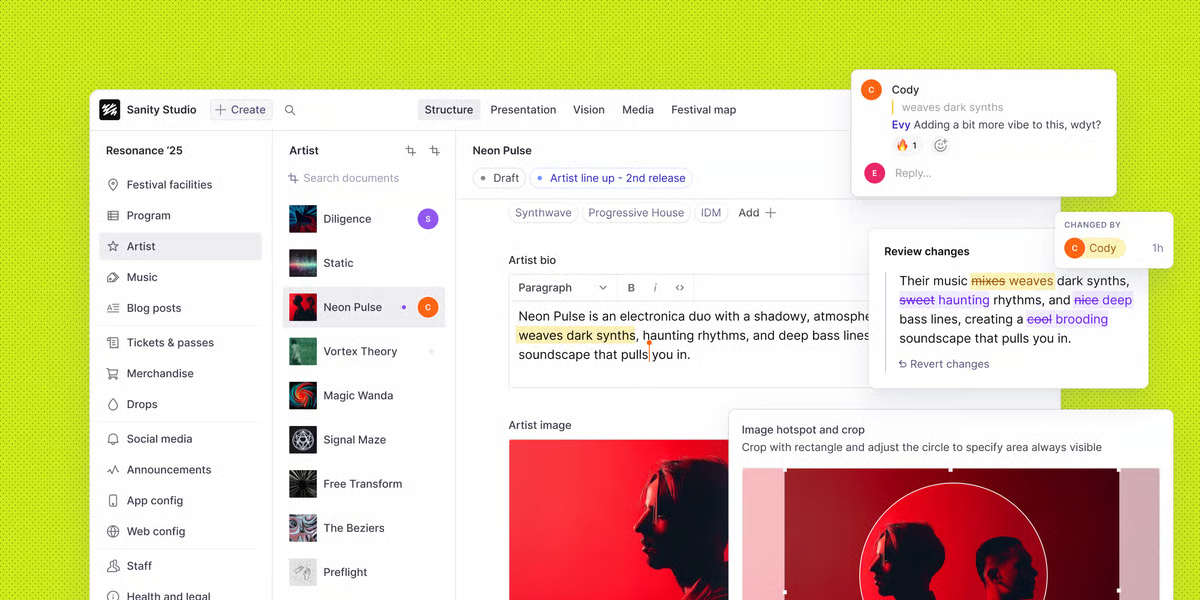
1. Sanity Studio
This is the “backend” where everything comes together.
- Fully customizable environment
- Build custom apps directly inside the Studio
- App SDK lets developers create any internal tool imaginable
- Agents & Actions bring AI directly into workflows
- Studio becomes the UI for your entire business
Studio is not like a CMS admin panel — it’s a platform.
2. Content Lake
This is Sanity’s data layer — the beating heart of the entire system.
- Stores all structured and unstructured data
- Handles massive volumes (hundreds of millions of documents)
- Optimized for fast read/write operations
- Real-time content updates across all apps
Think of this as your company’s single source of truth.
3. Flexible, Modern Data Modeling
Sanity feels like building on a modern database:
- Schema-based
- Completely flexible
- No rigid CMS constraints
- Perfect for complex, interconnected business systems
You’re not forced into “posts,” “pages,” or “custom fields” anymore.
You can model your business accurately.
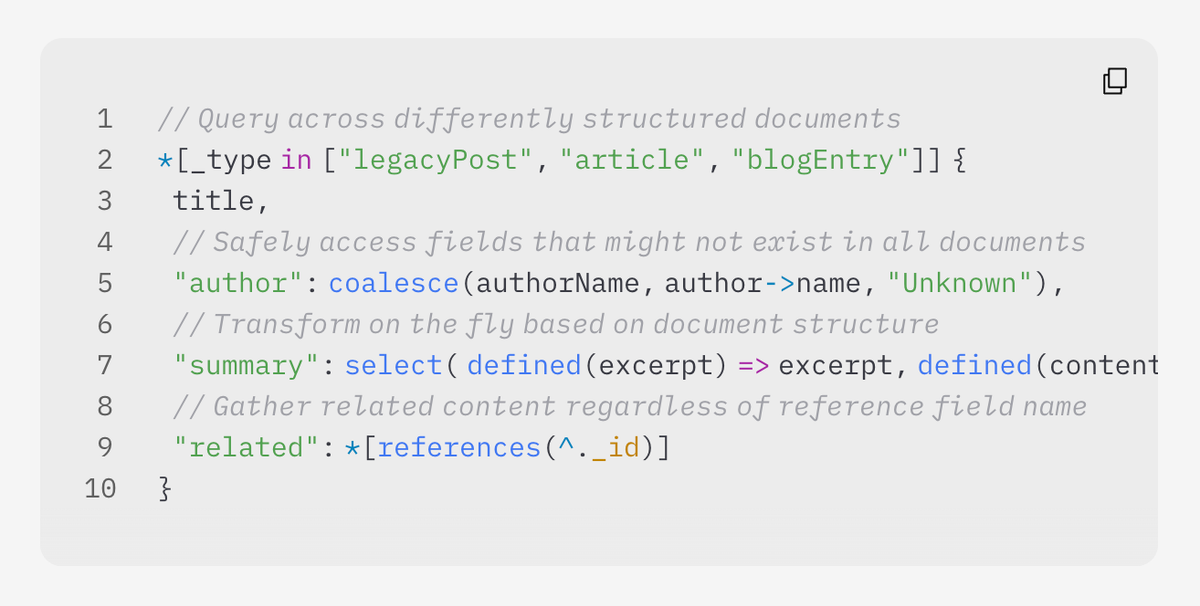
4. GROQ: The Query Engine
Sanity’s query language is one of its superpowers.
- Ultra-fast
- Easy to write
- Retrieve exactly the data you need
- Power real-time UI updates
- Enables high-performance apps
It’s like SQL and GraphQL had a child that loves developers.
5. Scalability & Performance
Sanity was built for enterprise scale:
- ~250 million datasets handled comfortably
- Built for teams that expect to grow
- Works with any modern frontend (Next.js, React, Angular, Vue, etc.)
- Architected as a global API-first platform
This is infrastructure that grows with your business — not against it.
Why Sanity Is Perfect for a Business Operating System
Now that we understand the building blocks, here’s why Sanity becomes a BOS.
1. A Unified Technical Architecture
In a Business OS, you need:
- A powerful backend → Sanity Studio
- A scalable database → Content Lake
- A flexible schema system → Schemas
- A lightning-fast query engine → GROQ
- Integration hooks → Webhooks, APIs
- AI automation → Agents & Actions
With Sanity, you get it all in one place.
2. Developers Can Build True “Apps” using Sanity Clients + App SDK
Real apps — not plugins.
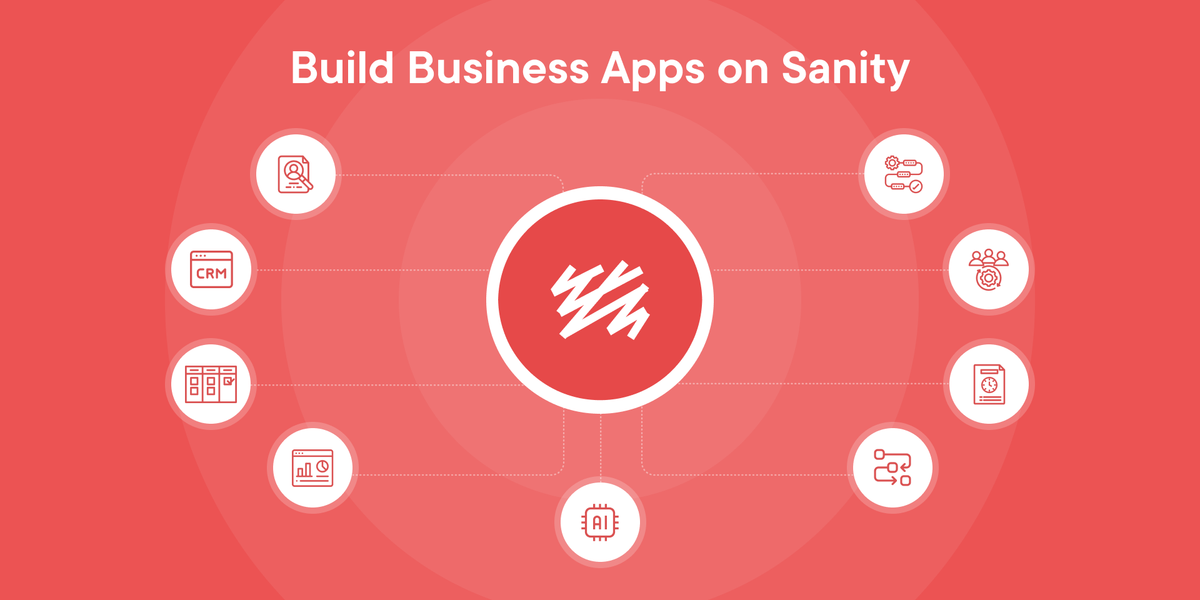
You can build:
- Recruitment portals
- CRM systems
- Task and delivery boards
- Dashboards
- AI-powered tools
- Internal workflows
- Time tracking systems
- HR automations
- Approval flows
And they all live inside ONE unified experience — the Studio.
3. AI-Enabled Workflows with Agents & Actions
This is the future.
With AI inside Sanity, you can:
- Automate repetitive tasks
- Enrich data
- Generate structured content
- Validate submissions
- Improve quality
- Add intelligent decision-making
- Support teams with internal AI copilots
Sanity becomes AI-native, not “AI patched on top.”
Building a Modern BOS on Sanity
Now, let me explain why I’m genuinely bullish on Sanity and why I believe it’s one of the best platforms to build modern micro-ERPs and business operating systems.
1. What a Business Operating System Includes
Most companies rely on tools for:
- HR
- Recruiting
- Finance
- Accounting
- Legal
- Support
- Delivery / fulfillment
- Sales & CRM
- Marketing
- Analytics
- Executive dashboards
These are usually spread across separate, disconnected platforms.
2. The Problem With Today’s Small Business Tech Stacks
Most companies use 20–40 SaaS tools:
- Too many siloed apps
- No unified data model
- Poor cross-team visibility
- Expensive monthly subscriptions
- Limited customization
- Constant switching fatigue
No one knows what's happening across the organization because the data lives everywhere — except together.
3. How Sanity Solves This
With Sanity, you can build a centralized BOS where:
- Every team’s data lives in one unified Content Lake
- Internal tools share the same database
- Frontend apps and dashboards are decoupled but connected
- You build custom tools tailored to your exact workflow
- AI automates operations across the business
This gives you what no SaaS stack can:
A system built exactly for your business — not someone else’s.
4. Examples of What You Can Build on Sanity
These are real BOS components you can build inside the Studio.
HR | Finance | Support | Production / Delivery | Leadership |
|---|---|---|---|---|
|
|
|
|
|
Sanity lets you connect all these tools under one roof.
Building Our Own mini ERP on Sanity
At Multidots, we’ve started building our own business operating systems inside Sanity.
We currently use over 15+ different tools across different teams.

We’ve already replaced 3 of our internal tools in just 1.5 months using Sanity + some vibe code.
- Ghost (Newsletter) → 4 weeks
- Screaming Frog (QA) → 3 weeks
- Harvest (Time Tracking) → 7 weeks
Our long-term vision:
Instead of managing dozens of SaaS tools, we’re building a micro ERP on Sanity to run our agency.
This is why I truly believe:
Sanity is not just a CMS.
Not just a Content OS.
But a Business Operating System.
Interested in a Behind-the-Build Walkthrough? Contact Us
We’re an official Sanity Partner, with a team of over a dozen Sanity-certified engineers, and we love helping teams think through what a real Business Operating System should look like.
Whether Sanity ends up being the right choice for you or not, our goal is simple: help you choose the right foundation and build on it with clarity and confidence.
And if you’re curious to see this in action — how these apps are actually built, how the architecture comes together, and what it looks like behind the scenes — we’re happy to give you a behind-the-build tour of some of the Sanity apps we’re building for our own agency. Just reach out, and we’ll walk you through it.


 BlogSanity isn’t just a CMS — It’s the New Business Operating System
Book a Free Sanity Demo
Let’s chat about your content goals—and show you what’s possible with Sanity.